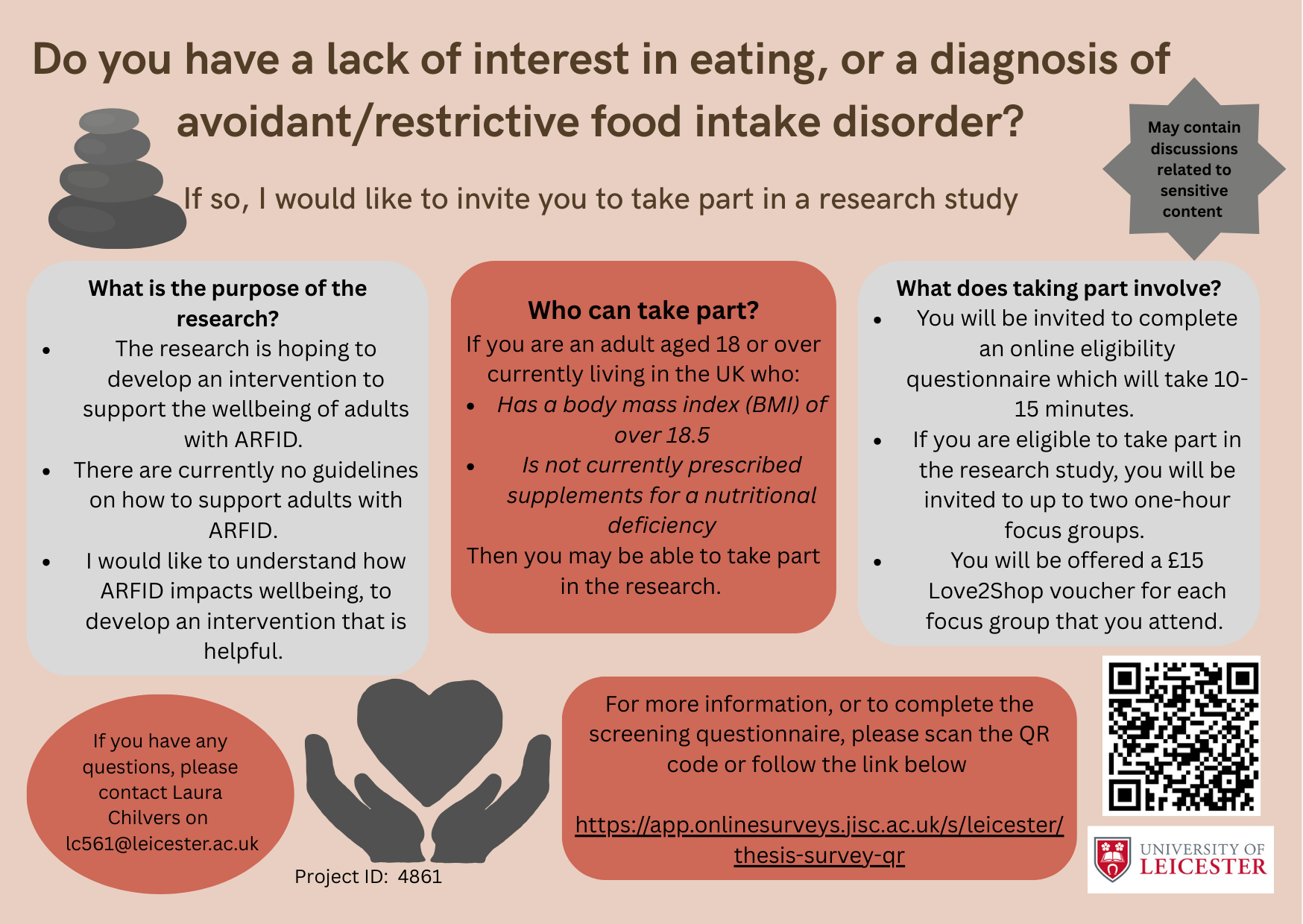
Researcher Laura Chilvers of University of Leicester is currently carrying out a research project focused on developing the treatment options available for adults with Avoidant/Restrictive Food Intake Disorder (ARFID). This project looks specifically at the “lack of interest” type of ARFID (referred to as ARFID-LOI). People with this type often describe little or no desire to eat, feeling full quickly, and struggling to eat enough to stay healthy.
The aim of this study is to identify behaviour change techniques that could help adults with ARFID-LOI improve their wellbeing — that is, their overall sense of happiness, health, and life satisfaction. The research will explore what wellbeing means to people living with this condition and what helps or makes it harder for them to make positive changes around eating.
The research will take place in two stages using online focus groups (group discussions held on Microsoft Teams). In the first stage, participants will talk about what “wellbeing” means to them and what gets in the way of feeling well. In the second stage, the discussions will focus on what needs to change to help people with ARFID-LOI eat better and feel better.
Around 15 adults with ARFID-LOI will be invited to take part. Participants will be identified using short questionnaires that screen for ARFID symptoms. They will receive a £10 voucher for each group they attend.
Who can take part?
Adults aged 18+ who are currently living in the UK who:
- Have a BMI of over 18.5
- Are not currently prescribed supplements for a nutritional deficiency
Find out more information and the screening questionnaire here: Lack of Interest in Avoidant Restrictive Food Intake Disorder: Designing a wellbeing focused intervention using the behaviour change wheel.
The participant data will be kept confidential and will be securely stored on the University storage system.
The study has received ethical approval from the Health, Biological and Psychological Sciences Research Ethics Committee at University of Leicester